Broccoli Microgreens: Yield, Grow Time, Cost, and Profitability
Master the commercial production economics of nutrient-dense broccoli microgreens. This data-backed guide details rapid 8-to-12 day harvest cycles, precision seed density, commercial yield benchmarks, sulforaphane marketing power, and high-margin pricing models.
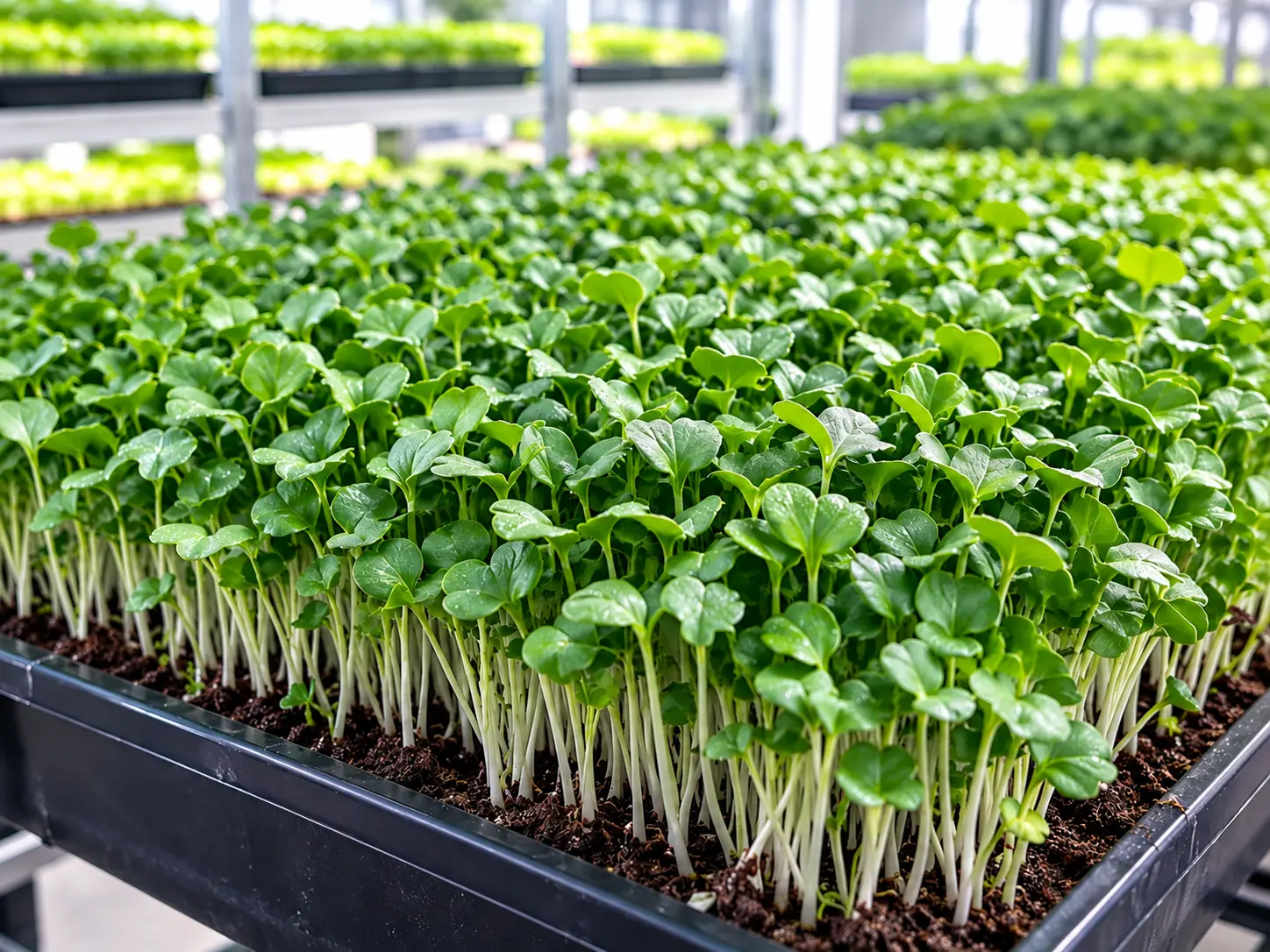
8 – 12 Days
8 – 14 oz
15 – 20 grams
Cotyledon
Beginner
Grow Time & Yield Expectations for Broccoli Microgreens
Broccoli microgreens (Brassica oleracea) are a cornerstone crop for commercial indoor vertical farms and home growers alike. Known for their mild cabbage-like sweetness, uniform germination, and extraordinary nutritional density, broccoli reaches peak harvest maturity in 8 to 12 days under standard indoor climate conditions (68°F–72°F / 20°C–22°C).
On a standard shallow 1020 growing tray with drainage, commercial growers consistently achieve yields between 8 to 14 ounces (225g to 400g) of clean, premium-grade greens. Compare these production numbers against other staple varieties in our complete microgreens yield per tray guide.
Grower Tip — Cotyledon Harvest Timing: Always harvest broccoli microgreens right as the first true leaves begin to form. If you allow true leaves to fully emerge, stems become fibrous, the delicate flavor turns unpleasantly bitter, and shelf life drops significantly.
Seeding Density & Germination Protocols for Broccoli Microgreens
Because broccoli seeds are small (roughly 250 to 300 seeds per gram), achieving uniform distribution is essential for good canopy airflow and mold prevention:
- Seed Density: Sow 15 to 20 grams (approx. 0.5 to 0.7 oz) per 1020 tray. Sowing beyond 22 grams severely restricts airflow at the soil line, creating humidity pockets that invite damp-off mold. Source high-germination seed lots using our microgreen seeds selection guide.
- No Pre-Soaking Required: Broccoli seeds have delicate seed coats that germinate quickly when in direct contact with moist substrate. Soaking brassica seeds turns them into a sticky, mucilaginous mass that cannot be spread evenly across the tray.
- Weighted Blackout Period: Stack sown trays 2 to 4 high with an empty tray and a 5 lb paving stone or brick on top for 72 hours (3 full days). This downward pressure forces the taproots deep into the soil and establishes an exceptionally uniform stem height across the canopy.
- Lighting & Bottom Watering: Move the trays to full spectrum LED lights on Day 4. Always transition to bottom-watering to keep the upper leaf canopy dry. Master full ventilation and lighting protocols in our how to grow microgreens master guide.
Sulforaphane Concentration & Health Marketing Power
Broccoli microgreens command a premium retail price largely because of their remarkable concentration of glucoraphanin, the glucosinolate precursor to sulforaphane. Pioneering medical research conducted by researchers at the Johns Hopkins University School of Medicine demonstrated that 3-day-old brassica sprouts and young microgreens contain 10 to 100 times higher levels of glucoraphanin than mature heads of broccoli.
Additional plant physiology analysis by the USDA Agricultural Research Service (ARS) confirmed that young brassica cotyledons provide superior bioavailable concentrations of vitamins C, E, and beta-carotene compared to mature field-grown produce. Highlighting these verified health benefits gives you a powerful marketing angle when selling to nutritionists, smoothie bars, and health food stores.
Popular Commercial Broccoli Varieties
Selecting the right cultivar ensures reliable harvest scheduling and strong consumer appeal:
- Calabrese: The commercial gold standard. Features uniform, vigorous germination, tender white-to-light-green stems, and consistent harvest yields per tray.
- Waltham 29: Highly tolerant of cooler indoor rack temperatures (60°F–65°F), producing slightly thicker stems and robust cotyledon leaves.
- De Cicco: An Italian heirloom variety popular for its fast 8-to-9 day cycle and tender, mild flavor.
- Brassica Micro-Blends: Commercial growers frequently blend broccoli with red cabbage, kohlrabi, and mustard to create balanced, visually appealing salad mixes.
Broccoli Microgreens Profitability Breakdown
With low seed costs per tray and steady retail demand, broccoli offers exceptional profit margins:
- Average Yield: 11 oz (310g) per 1020 tray
- Seed Cost (18g bulk Calabrese seed): $0.75
- Substrate & Utilities Allocation: $0.95
- Packaging (Clamshells & Labels): $0.60
- Total Cost Per Tray: $2.30
- Wholesale Revenue ($2.50/oz): $27.50 per tray
- Net Profit Per Tray: $25.20 (91.6% gross margin)
Model your own farm capacity and expenses in our growing microgreens for profit analysis.
How to Sell & Distribute Broccoli Microgreens
Broccoli microgreens sell consistently across three core channels: direct-to-consumer farmers markets, subscription delivery boxes, and restaurant wholesale. Because of their mild, approachable flavor, chefs use them generously across breakfast eggs, grain bowls, sandwiches, and soup garnishes. Read proven pitching and packaging strategies in how to sell microgreens commercially.
Frequently Asked Questions About Broccoli Microgreens
Do broccoli microgreens regrow after cutting?
No. Once broccoli microgreens are harvested at the cotyledon stage, the growing tip is removed and the roots will not produce a profitable second harvest. Trays must be composted, washed, and resown for the next batch.
Should I soak broccoli microgreens seeds?
No. Broccoli seeds have thin hulls and absorb moisture directly from the growing medium. Soaking them causes them to clump together into a sticky gel, making it nearly impossible to distribute them evenly across the tray.
How long do fresh broccoli microgreens last after harvest?
When harvested completely dry and stored in sealed clamshells with food-grade absorbent pads at 36°F–38°F (2°C–3°C), broccoli microgreens will stay crisp and fresh for 10 to 14 days.
How much sulforaphane is in broccoli microgreens?
Broccoli microgreens contain between 10 to 100 times more glucoraphanin (the precursor compound converted into sulforaphane by myrosinase enzymes) than mature heads of broccoli on a per-weight basis.
Explore More Crop Guides: Pair healthy broccoli with fast-growing Radish Microgreens, sweet Pea Shoots, and high-yielding Sunflower Microgreens for a balanced commercial harvest.