Pea Microgreens & Pea Shoots: Yield, Cost, and Profitability
Understand the production economics of pea shoots and pea microgreens. This comprehensive guide breaks down typical grow times, heavy seed density requirements, high-volume yield expectations, and the exact math behind commercial pricing and profit margins.
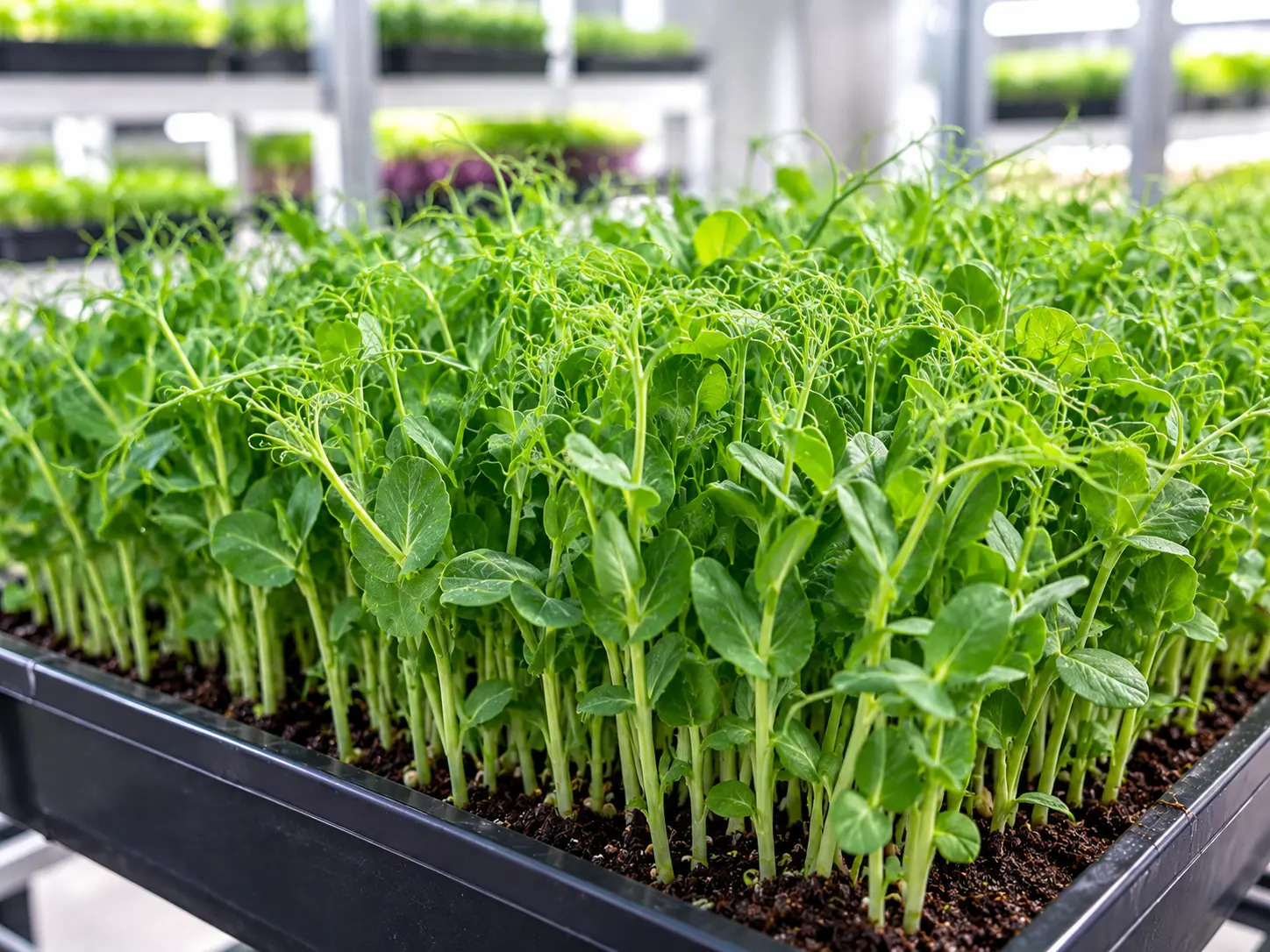
10 – 14 Days
16 – 24 oz
300 – 400g
Tendrils / Shoots
Beginner
Grow Time & Yield Expectations for Pea Microgreens
Pea microgreens (often sold as speckled pea shoots or tendril peas) are among the most reliable, high-yield cash crops for small indoor farms. Under standard indoor climate conditions (68°F–72°F / 20°C–22°C), pea microgreens typically reach their ideal commercial harvest stage in 10 to 14 days.
Because of their thick stalks and rapid biomass accumulation, pea microgreens deliver impressive weight per tray. On a standard 1020 growing tray, commercial operations consistently report yields ranging from 16 to 24 ounces (450g to 680g). Compare this to our microgreens yield per tray benchmark guide to see how peas stack up against other staple crops like broccoli microgreens.
Pro Grower Tip: Expected yield is not a guarantee. We always advise calculating revenue based on a conservative 16 oz per tray baseline until your soak, stacking weight, and watering routines are dialed in.
Seed Density, Soaking & Production Requirements
Unlike small-seeded brassicas, pea seeds require specific preparation before seeding to ensure rapid, uniform germination across the tray:
- Seed Soaking (Mandatory): Submerge pea seeds in cold, clean water for 8 to 12 hours. This softens the hard outer seed coat and triggers uniform root emergence. Drain thoroughly before sowing. Check our microgreen seeds sourcing guide for vetted seed suppliers.
- Sowing Density: Sow between 300 and 400 grams of dry seed (weighed prior to soaking) per standard 1020 tray. Spread evenly in a single layer with no overlapping clumps.
- Weighted Blackout: Stack trays with 5–7 lbs of weight on top for 3 to 4 days. This forces the taproots deep into the soil and establishes sturdy, thick stalks.
- Growing Medium: Pea microgreens perform exceptionally well on potting soil or coco coir. Hydroponic mats are generally not recommended due to the heavy moisture demands of pea roots.
Market Channels & Pricing Dynamics
Pea microgreens are a chef favorite due to their sweet snow-pea crunch and attractive tendrils that hold up well in hot food plating. Selling prices vary according to your customer channel:
- Restaurant Chefs (Wholesale): Typically purchase bulk 1-lb or 2-lb bags at $1.25 to $2.00 per ounce ($20 to $32/lb) on weekly standing orders.
- Farmers Markets & Direct-to-Consumer: Clamshells of 4 oz typically sell for $5.00 to $6.00 ($1.25–$1.50/oz), appealing to families and health-conscious shoppers. Learn more strategies in our guide on how to sell microgreens.
Pea Microgreens Profitability at a Glance
Here is a realistic financial breakdown for a single 1020 tray of commercial pea microgreens:
- Average Yield: 18 oz (1.12 lbs)
- Seed Cost (350g bulk seed): $2.20
- Soil, Water & Electricity: $1.10
- Total Production Cost: $3.30 per tray
- Wholesale Revenue ($1.50/oz): $27.00 per tray
- Net Profit Per Tray: $23.70 (87% gross margin)
Numbers assume bulk seed purchases (25–50 lb bags). Read our deep dive on growing microgreens for profit for whole-farm projections.
Operational Considerations: Single Cut vs. Regrowth
While pea plants can technically regenerate secondary shoots after cutting, commercial growers strongly advise a single harvest only. Second cuts yield significantly thinner, tougher stalks with reduced sugar content and introduce higher risks of fungal contamination. Always compost the root mat and start fresh trays.
Frequently Asked Questions About Pea Microgreens
Are pea microgreens good for commercial beginners?
Yes! Peas have large seeds that forgive minor moisture fluctuations, germinate rapidly, and yield heavy weights that make restaurant deliveries profitable immediately.
How long do pea microgreens stay fresh post-harvest?
When harvested dry and promptly stored at 36°F–38°F (2°C–3°C) in ventilated clamshells or food-grade bags, pea microgreens easily hold commercial crispness for 10 to 14 days.
Explore More Crop Guides: Pair your pea shoots with fast-growing Radish Microgreens or high-demand Broccoli Microgreens to offer a balanced restaurant salad blend.