Radish Microgreens: Yield, Grow Time, Cost, and Profitability
Master the commercial production economics of fast-growing radish microgreens. This data-backed guide details rapid 7-to-10 day harvest windows, precision seed density, commercial yield benchmarks, and maximum rack turnover strategies.
7 – 10 Days
18 – 28 oz
28 – 35 grams
Cotyledon
Very Easy
Grow Time & Yield Expectations for Radish Microgreens
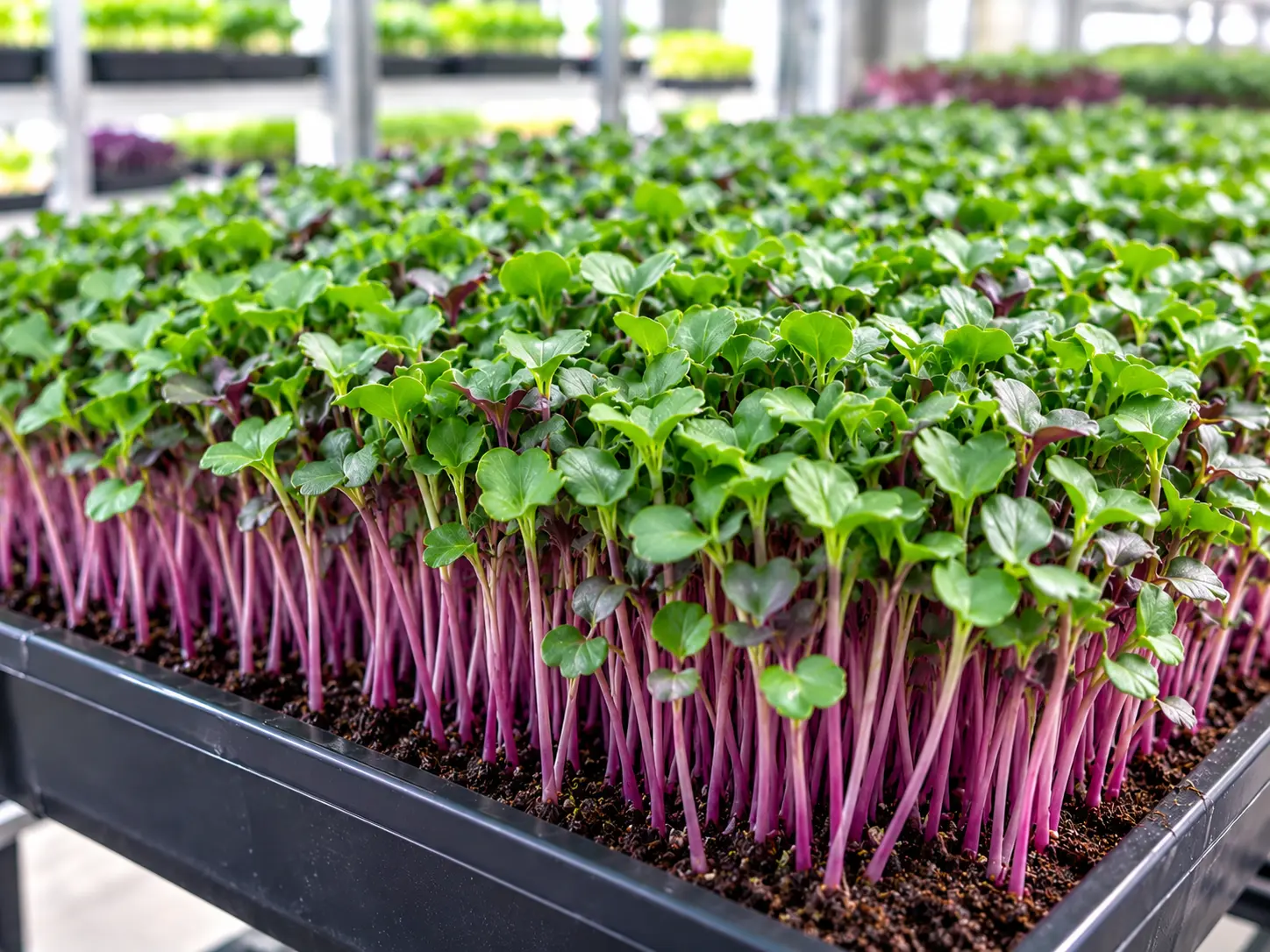
Radish microgreens are widely considered the fastest, most reliable cash-flow crop in the vertical farming industry. Reaching peak harvest maturity in just 7 to 10 days, radish allows indoor growers to achieve up to 4 complete harvest turns per shelf each month.
On a standard 1020 tray with drainage, commercial growers consistently harvest between 18 to 28 ounces (500g to 800g) of crisp, peppery greens. Discover how this compares with other quick crops in our complete microgreens yield per tray guide.
Beginner Tip — Root Hairs vs Mold: During days 2–3 of blackout, radish microgreens produce dense, microscopic white root hairs. Beginners frequently mistake these fuzzy root hairs for mold. Root hairs cling uniformly to individual root radicles; if it rinses clean without spiderweb webs, your crop is perfectly healthy!
Seeding Density & Germination Protocols
Radish seeds germinate vigorously and require no pre-soaking. Follow these tested commercial seeding standards:
- Seed Density: Sowing 28 to 35 grams (approx. 1.0 to 1.25 oz) per 1020 tray provides optimal canopy density without overcrowding. Over-seeding beyond 35g creates moisture traps that encourage damp-off. Source certified pathogens-tested seed via our microgreen seeds guide.
- No Soaking Required: Radish seeds possess thin seed hulls and absorb soil moisture immediately. Soaking radish seeds often causes them to clump into a gelatinous mass that is impossible to sow evenly.
- Weighted Blackout Period: Stack trays 2–3 high with a 5 lb brick or paving stone for 48 to 72 hours. This pushes roots firmly into the substrate and aligns stem heights.
- Lighting & Airflow: Move to light on Day 3 or 4. Ensure horizontal airflow fans keep relative humidity below 60% to maintain crisp leaf texture. Learn full fundamentals in our how to grow microgreens master guide.
Popular Commercial Radish Varieties
Not all radishes look the same. Choosing high-contrast varieties lets you charge premium prices:
- Rambo Radish: Stunning deep purple cotyledons and crimson stems; highly requested by sushi restaurants and upscale bistros as a colorful garnish.
- China Rose: Light green leaves with bright pink stems; exceptional flavor intensity and long shelf stability.
- Daikon Radish: Clean green leaves with white stems; traditional spicy kick with very affordable seed costs per pound.
Radish Microgreens Profitability Breakdown
Because radish turns over twice as fast as crops like basil or cilantro, your monthly rack ROI is exceptionally high:
- Average Yield: 22 oz per tray
- Seed Cost (30g bulk seed): $1.35
- Substrate & Utilities: $0.95
- Total Cost Per Tray: $2.30
- Wholesale Price ($1.25/oz): $27.50 per tray
- Net Profit Per Tray: $25.20 (91% gross margin)
Compare your local numbers with our detailed microgreens business profit analysis.
How to Sell & Distribute Radish Microgreens
Radish microgreens sell easily through both wholesale restaurant accounts and farmers markets. Restaurants use them as a replacement for raw horseradish or wasabi due to their intense peppery glucosinolate profile. Review our field-tested sales playbooks in how to sell microgreens to restaurants and markets.
Explore More Crop Guides: Expand your commercial lineup with our growing guide for Pea Microgreens or our foundational Broccoli Microgreens Guide.